

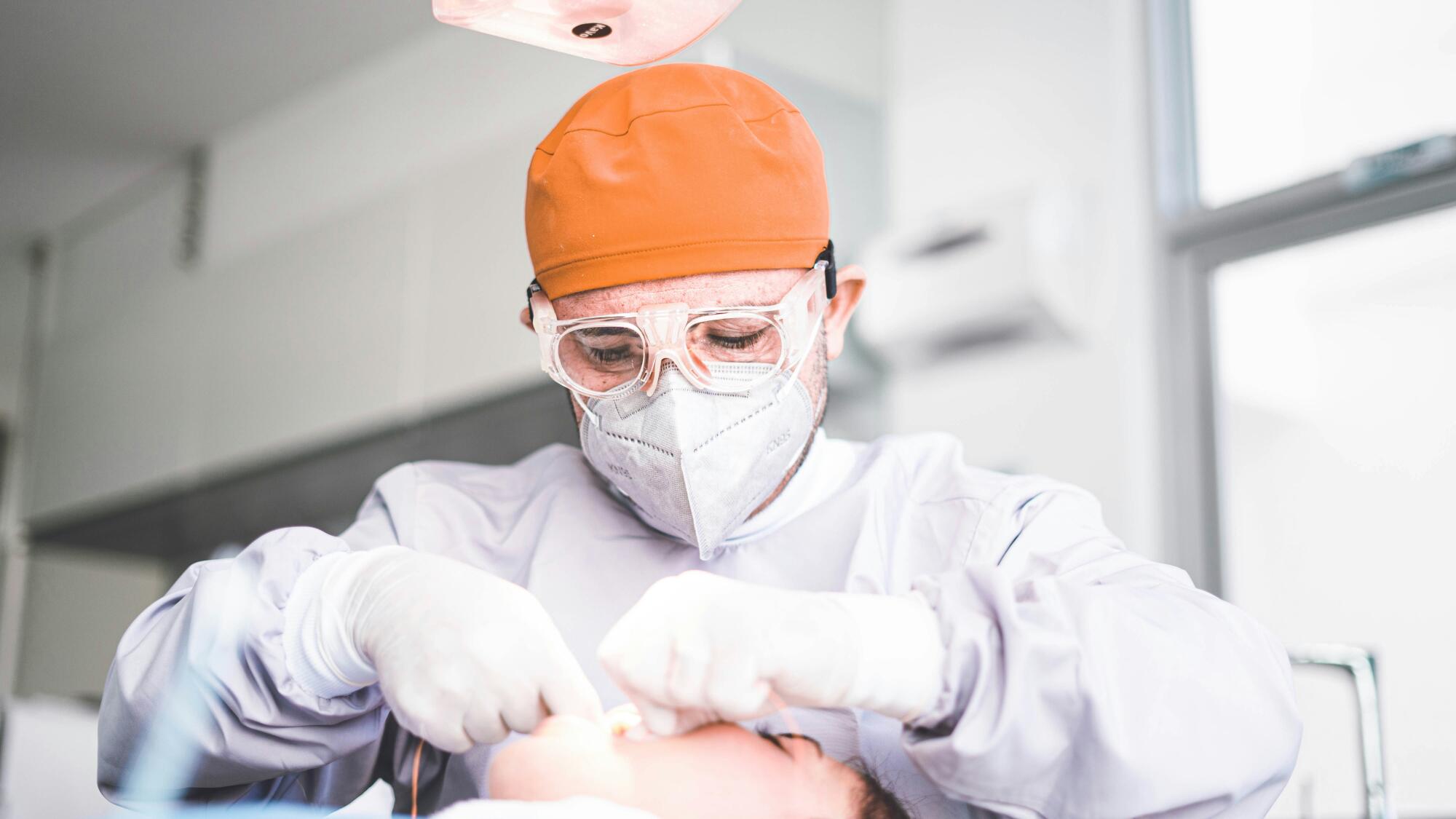
Protecting your facial bone structure after a tooth extraction starts with preserving as much of the jawbone as possible during healing. Techniques such as bone grafting and socket preservation can limit ridge shrinkage, while timely implant planning can help maintain structural support over the longer term.
Worried that losing a tooth could eventually change the shape of your face? Bone remodeling is most pronounced during the first few months after extraction, and a 2025 systematic review from the University of Hong Kong reports that horizontal ridge reduction can reach 29% to 63% during the first six months. An oral surgeon in Durham, NC, can evaluate the extraction site and determine whether alveolar bone preservation techniques are appropriate.
What Happens to Your Jawbone After a Tooth Is Removed?
Your jawbone constantly rebuilds itself in response to the forces placed on it. Removing a tooth changes those forces and starts several important changes:
- Loss of root stimulation
- Natural socket healing
- Changes in ridge dimensions
Loss of Root Stimulation
The alveolar bone is the part of your jaw that holds and surrounds each tooth root. Chewing transfers pressure through the root and into this bone.
After extraction, that direct stimulation disappears. The body then begins reshaping bone that no longer serves the same purpose.
Natural Socket Healing
The empty socket fills with a blood clot soon after extraction. New tissue gradually replaces the clot as healing continues.
Bone then develops within the socket over the following months. However, healing doesn’t restore the ridge to its original dimensions.
Changes in Ridge Dimensions
The ridge commonly becomes narrower as the bone remodels after extraction. Some loss of height can also occur.
Alveolar bone preservation aims to limit these changes and retain more bone for future treatment. Maintaining adequate bone can make later dental implant placement more predictable.
Can Tooth Loss Really Change the Shape of Your Face?
Tooth loss can affect facial structure, but the extent varies greatly from person to person. The most noticeable changes usually depend on several factors:
- Number of missing teeth
- Location of tooth loss
- Time without replacement
Number of Missing Teeth
One missing tooth usually won’t cause dramatic facial sagging on its own. Losing several teeth can have a greater structural effect. Widespread tooth loss reduces the bone needed to maintain the natural shape of the jaws.
Location of Tooth Loss
Different teeth contribute to facial structure in different ways. Front teeth and their surrounding bone help maintain support around the lips.
Missing back teeth can reduce the height of the bite over time. This may change the proportions of the lower face.
Time Without Replacement
Bone remodeling continues after an extraction site has healed. Long periods without teeth can therefore produce more significant changes. The ridge may gradually become narrower and shorter as bone volume declines.
How Can a Socket Preservation Graft Protect Bone?
A socket preservation graft can reduce bone loss after a tooth extraction. The procedure focuses on maintaining the ridge as the extraction site heals:
- Filling the empty socket
- Encouraging bone growth
- Preparing for tooth replacement
Filling the Empty Socket
After extraction, grafting material is placed inside the space previously occupied by the tooth root. The material acts as a framework for healing tissue. A protective membrane may also cover the area in some cases.
Encouraging Bone Growth
A socket preservation graft doesn’t stop all natural bone remodeling. Instead, it aims to reduce how much ridge width and height are lost.
Over time, the patient’s own bone can develop throughout the healing area. This process may preserve more usable bone than extraction alone.
Preparing for Tooth Replacement
Maintaining ridge dimensions can improve the conditions for a future dental implant. Adequate bone is needed to surround and stabilize the implant. Grafting may also reduce the need for a larger bone graft later.
When Should You See an Oral Surgeon in Durham, NC?
An exam can show how much healthy bone remains around the damaged tooth. Dental imaging can reveal details that aren’t visible during a standard examination. Three-dimensional scans may also show the width and height of the available bone.
Socket Condition
The surgeon can evaluate the bone walls that surround the tooth root. Infection or existing bone loss may affect how the site heals after extraction. These findings can influence whether grafting is appropriate at the same appointment.
Future Tooth Replacement
Planning ahead becomes especially important when a dental implant is the long-term goal. The implant needs enough bone for stable placement and proper positioning. Early evaluation can determine whether preserving the extraction socket could improve those conditions.
Frequently Asked Questions
How Long Should You Wait to Get an Implant After an Extraction?
Implant timing depends on the condition of the extraction site and your individual healing. Some implants can be placed immediately after extraction. Other sites need several months for bone and gum tissue to heal first. Infection or grafting may also change the schedule.
Can Bone Be Rebuilt Years After a Tooth Was Lost?
Bone grafting can sometimes rebuild areas that have lost significant volume over several years. Ridge augmentation can increase bone in a thin or shallow area.
Upper back teeth may require a sinus lift when available bone height is limited. Your anatomy determines which procedures are possible.
Does Wearing Dentures Stop Jawbone Loss?
Traditional removable dentures don’t replace tooth roots. As a result, they don’t provide the same stimulation within the jawbone.
The ridge can continue shrinking beneath a denture over time. Changes in bone shape may eventually affect how securely the denture fits.
Dealing With Facial Aging
An oral surgeon in Durham, NC, can evaluate your bone, recommend appropriate preservation methods, and develop a plan for lasting function.
At Jelic Center, we combine university-level expertise with the personal attention of a country doctor. For nearly 20 years, we have delivered specialized oral and maxillofacial care throughout the Raleigh-Durham-Chapel Hill area. Unlike high-volume clinics, we thoroughly assess each patient’s unique needs before recommending treatment. Our services include dental implants, wisdom tooth removal, corrective jaw surgery, and more.
Get in touch today to find out how we can help with your dental health.